Stranger at the Gate: Recovering the Radical Hospitality Scripture Commands and American Christianity Has Abandoned
The Verses We Skip
There is a particular discipline that serious Bible readers must practice: reading past the passages that confirm what they already believe and sitting, uncomfortably, with the ones that do not. For a significant portion of American Christianity today, the texts dealing with economic obligation, care for the foreigner, and the redistribution of resources toward the vulnerable occupy precisely that uncomfortable territory. They are not unknown. They are simply avoided.
This is not a peripheral concern. The biblical witness on these matters is not buried in obscure prophetic footnotes. It runs like a spine through the Old Testament law, through the Hebrew prophets, through the Gospels, and into the epistles of the early Church. To ignore it is not theological neutrality. It is a choice—and American Christians deserve to name that choice honestly.
What Leviticus Actually Says
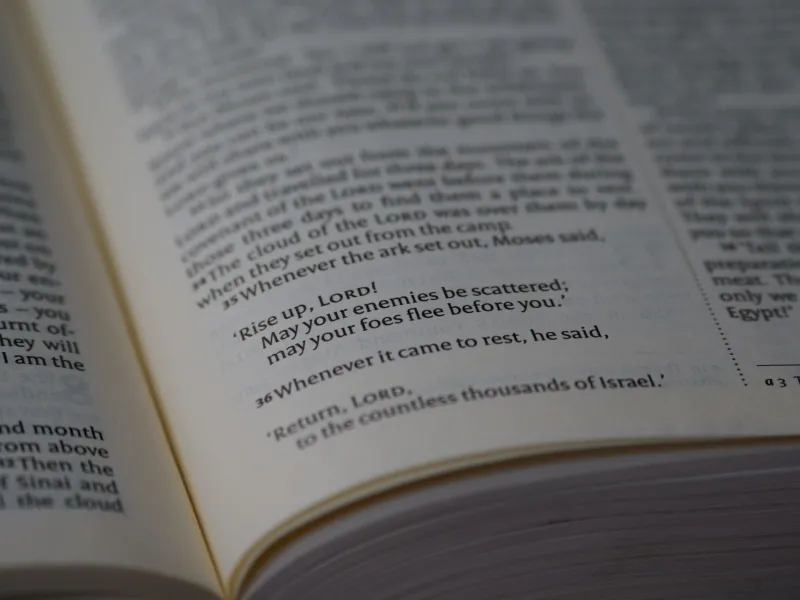
Long before Jesus walked the roads of Galilee, the Torah established an economic framework that would have scandalized any modern political commentator. Leviticus 19:9–10 commands farmers to leave the edges of their fields unharvested and to refrain from gathering fallen grain—explicitly so that the poor and the stranger may glean what remains. This was not charity in the voluntary, discretionary sense Americans typically invoke. It was law. It was obligation woven into the structure of Israelite economic life.
Deuteronomy 24 extends this principle across multiple domains: the forgotten sheaf in the field, the olive branch left on the tree, the grape clusters not gathered a second time—all reserved, by divine command, for the widow, the orphan, and the foreigner residing among the people of God. The Hebrew word used throughout, ger, refers specifically to the resident alien, the outsider living within the community's borders. God's law did not merely tolerate the stranger. It structured the economy around their provision.
The prophets who followed hammered this theme with relentless urgency. Isaiah condemned Israel not primarily for ceremonial failures but for neglecting justice toward the poor and the foreigner. Ezekiel lists mistreatment of the stranger among the gravest sins of Jerusalem. Zechariah 7:10 records God's direct instruction: "Do not oppress the widow or the fatherless, the foreigner or the poor."
This is not a minor thread. It is the fabric itself.
The Jesus Who Made People Uncomfortable
When Christ arrived, He did not soften this tradition. He radicalized it.
The parable of the Good Samaritan was not, as it is often sentimentalized, a warm story about neighborliness. It was a confrontational narrative designed to demolish the boundaries His audience had constructed around the concept of obligation. The hero was a foreigner, a religious outsider. The victims of priestly neglect were the listeners themselves. The command that followed—"Go and do likewise"—was not a suggestion.
In Matthew 25, Jesus delivers what may be the most economically explicit judgment passage in all of Scripture. The separation of the nations turns not on doctrinal confession but on concrete acts: feeding the hungry, giving drink to the thirsty, welcoming the stranger, clothing the naked, visiting the sick and imprisoned. "Whatever you did for one of the least of these brothers and sisters of mine," He declares, "you did for me." The inverse—whatever you failed to do—carries consequences of eternal weight.
The Greek word translated "stranger" in Matthew 25:35 is xenos—the foreigner, the one from outside. Christ is not speaking abstractly about general benevolence. He is speaking about the person who does not belong, who has come from elsewhere, who is vulnerable precisely because they lack the social networks and legal protections that the established community enjoys.
Where American Christianity Has Landed
Against this backdrop, the political alignment of a majority of self-identified American Christians presents a serious theological problem—one that demands honest engagement rather than partisan deflection.
Polling data has consistently shown that white evangelical Christians, in particular, express the most restrictive views on immigration of any major religious demographic in the United States. They are disproportionately skeptical of refugee resettlement, supportive of aggressive border enforcement, and resistant to pathways for undocumented residents. They are also, by self-report, the group most likely to believe the Bible is the authoritative Word of God.
The dissonance here is not subtle. It requires active intellectual effort to hold these positions simultaneously without confronting the contradiction. That effort, it appears, is being made—but it is the effort of rationalization, not discernment.
This is not an argument for any specific legislative program. Christians of genuine faith may disagree about the most effective and just mechanisms for managing national borders, refugee admissions, and immigration law. Policy complexity is real. But the posture—the instinctive suspicion of the stranger, the comfort with their suffering, the ease with which their humanity is subordinated to political preference—that posture is not politically neutral. It is theologically revealing.
The Prosperity Gospel's Hidden Immigration Theology
There is a subtler distortion at work as well. The prosperity gospel, which has saturated much of American evangelical and charismatic Christianity, carries within it an implicit economic theology that is almost perfectly inverted from the one Scripture teaches. Where the Bible instructs the prosperous to structure their abundance around the needs of the vulnerable, the prosperity framework instructs the individual to pursue divine blessing as personal accumulation. Generosity becomes a transaction—you give to receive more—rather than an act of covenant solidarity with those who have nothing.
This theological mutation has consequences beyond the offering plate. It shapes how American Christians understand wealth, desert, and belonging. If prosperity signals divine favor, then the poverty of the stranger can be quietly coded as divine disfavor. The immigrant who arrives destitute becomes, within this framework, someone whose condition reflects their spiritual standing rather than the structural conditions that produced it. Scripture's reversal of this logic—the prophetic tradition that regards the suffering of the poor as an indictment of the powerful, not the poor—gets lost entirely.
A Call to Honest Reading
Head to Christ exists because we believe that Christian faith must be more than cultural identity. It must be a living encounter with the living Word—including the parts of that Word that disturb our political loyalties and unsettle our comfortable assumptions.
The call here is not to a particular party or platform. It is to intellectual and spiritual honesty. Read Leviticus 19. Read Deuteronomy 24. Sit with Matthew 25 in its full weight. Ask, without the filter of your preferred political commentator, what these texts demand of you—not as a citizen navigating policy, but as a disciple accountable to the One who said He is encountered in the face of the stranger.
American Christianity has a long tradition of prophetic courage. It also has a long tradition of theological accommodation to the prejudices of its cultural moment. The question before the Church in this generation is which tradition it will honor.
The gate is not empty. Someone is standing at it. Scripture is remarkably clear about what faithfulness looks like in that moment.