What the Global Church Is Trying to Teach Us and We Are Too Comfortable to Hear
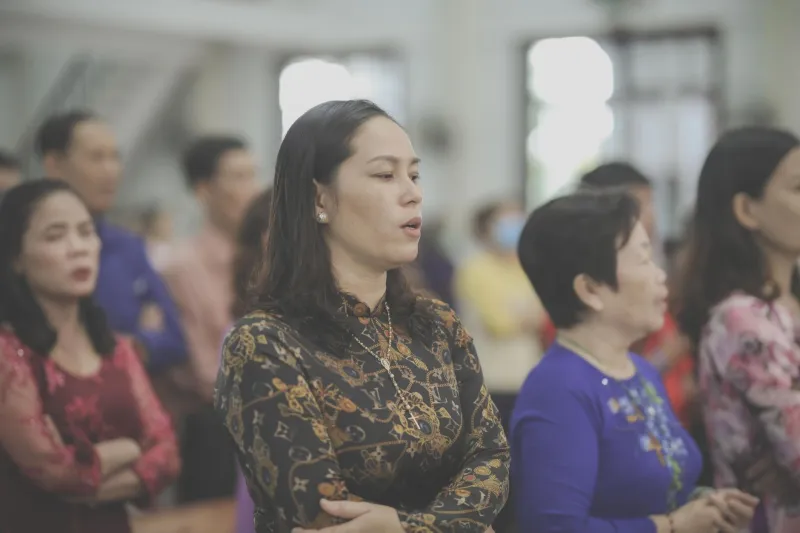
The Church That Arrived at Our Door
In the past several decades, a remarkable and largely unacknowledged gift has been deposited within the borders of the United States. Believers from Nigeria, South Korea, Ethiopia, the Philippines, El Salvador, China, Iran, and dozens of other nations have built congregations in American cities and suburbs — some worshipping in languages that most of their neighbors cannot identify, some blending into English-speaking churches while quietly carrying a depth of practice that their American-born fellow members often cannot perceive.
These are not peripheral additions to the American Christian landscape. They represent, in many cases, the living edge of global Christianity — a faith formed under conditions of genuine scarcity, real persecution, and the kind of total dependence on God that prosperity makes almost impossible to sustain. They are, in the most literal sense, our neighbors. And the American church, by and large, has not been listening to them.
This is a failure of humility. It may also be a failure of survival.
The Theology of Those Who Have Nothing Else
There is a form of prayer that is nearly impossible to pray from a position of material security. It is the prayer of absolute necessity — not the prayer of one who is asking God to supplement an already sufficient life, but the prayer of one for whom God is the only available resource. It is the prayer described in the Psalms with a rawness that can make comfortable Western readers slightly uncomfortable: "I am poor and needy; hasten to me, O God."
Believers who have come to American shores from contexts of genuine poverty, political instability, or active persecution frequently pray this way as a matter of course. For them, it is not a spiritual exercise. It is a description of reality. And the faith it produces — intimate, urgent, undecorated, and utterly serious — stands in sharp contrast to the managed, scheduled, professionally facilitated spirituality that characterizes much of American church life.
A Congolese pastor leading a small congregation in Atlanta does not need to be taught that prayer is important. He has prayed over dying children in a context where prayer was the only medicine available. A Chinese house church leader meeting with a fellowship in Houston does not need to be convinced that community is essential to the Christian life. She has belonged to a community where belonging required courage and where the cost of that community was real.
These are not exotic spiritual experiences to be admired from a distance. They are the baseline conditions under which most of Christian history has been lived. It is American Christianity, not global Christianity, that is the anomaly.
What Sacrifice Looks Like When It Is Not Optional
American Christianity has developed an elaborate theology of voluntary sacrifice — tithing as a spiritual discipline, short-term mission trips as formative experiences, fasting as a periodic practice. These are not without value. But they are, by definition, chosen. They can be discontinued when inconvenient. They exist within a framework of fundamental security that makes them additions to a stable life rather than the life itself.
For much of the global church, sacrifice is not a discipline voluntarily undertaken. It is the condition of discipleship. Ethiopian believers who walk hours to attend a church service are not practicing spiritual endurance; they are simply going to church. Filipino migrant workers who send a portion of their already meager wages back to support their home congregation are not demonstrating exceptional generosity; they are participating in the ordinary economy of their community.
The practical effect of this difference is theological. When sacrifice is the normal condition of faith rather than an exceptional spiritual practice, it shapes the believer's understanding of what the gospel actually costs — and therefore what it is actually worth. A faith worth dying for is understood differently than a faith worth inconveniencing yourself for on a Saturday morning.
The Prophetic Courage That Comfort Has Eroded
One of the most striking characteristics of Christianity in the Global South and in immigrant communities within the United States is its prophetic directness. Churches in Latin America that have confronted narco-violence from the pulpit, congregations in sub-Saharan Africa that have challenged corrupt governments despite significant personal risk, Iranian house churches whose members face imprisonment for their gatherings — these communities have not had the luxury of the carefully calibrated, politically neutral, nobody-gets-offended homily that has become standard fare in many American congregations.
They have learned, by necessity, that the gospel makes claims on the whole of life — political, economic, familial, and social — and that a preaching which avoids those claims is not protecting the congregation from division. It is depriving the congregation of the word they most need.
When immigrant believers sit in American pews and hear sermons carefully engineered to offend no one, the dissonance can be profound. They come from traditions where the preacher's courage was a matter of communal survival. They have arrived in a context where the preacher's caution is a matter of institutional management.
The Joy That Has Not Been Explained Away
Perhaps the most disorienting gift that global and immigrant Christianity carries is its joy. Not the performed positivity of the prosperity gospel, which promises that faith will produce wealth and health, but the deep, almost defiant gladness of people who have found in Christ something that their circumstances cannot diminish.
This joy is theologically significant. It is, in fact, one of the New Testament's most persistent and most countercultural claims — that the peace of God surpasses understanding, that joy is possible in all circumstances, that contentment can be learned regardless of condition. American Christianity affirms these propositions intellectually while frequently failing to embody them, because the material conditions of American life make it possible to seek contentment through means other than Christ.
The believer who has been stripped of those alternative means and has found joy anyway is not demonstrating a spiritual technique. They are demonstrating the truth of the gospel in a way that no amount of theological argument can replicate.
The Humility Required to Receive
For American Christians to receive what the global church offers, a particular kind of humility is required — the humility to acknowledge that size, wealth, and institutional sophistication are not the same as spiritual depth, and that the largest buildings and the most polished programming may be housing the most impoverished faith.
This is not a comfortable acknowledgment. American Christianity has long operated on the assumption that it has something to give the world — missionaries to send, resources to deploy, models to export. The possibility that the traffic might run in the other direction, that the church in the margins might be the one with something to teach the church at the center, requires a fundamental reorientation.
But it is precisely the reorientation that the New Testament commends. The last shall be first. The poor in spirit shall inherit the kingdom. The one who humbles himself shall be exalted. These are not merely eschatological promises. They are present-tense descriptions of how God works — including, perhaps especially, in the life of the church.
The global church is at our door. It is in our cities, in our neighborhoods, in some cases in the pew beside us. The question is whether American Christianity will have the grace to stop talking long enough to listen.