The Convenient Bible: How American Christians Have Learned to Read Around What They Cannot Bear to Obey
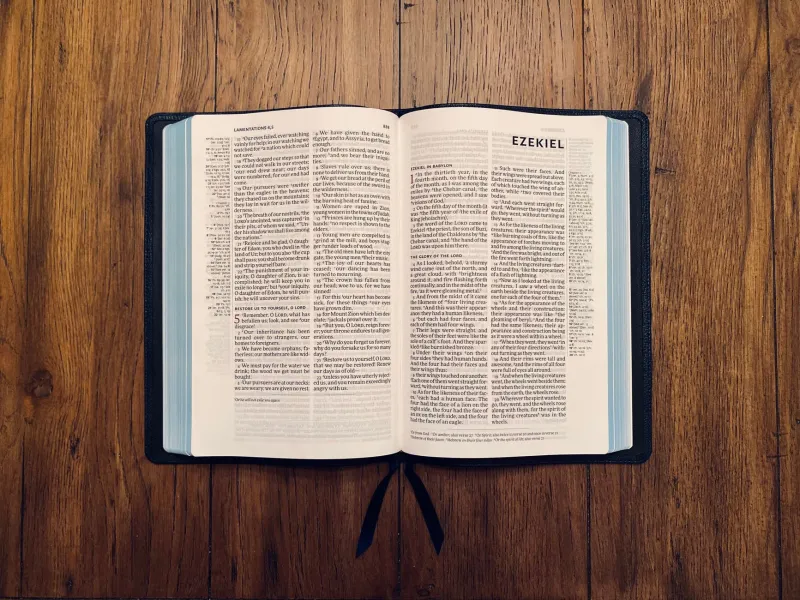
There is a peculiar kind of spiritual confidence that flourishes in American Christianity—one that is entirely comfortable in the pew, fluent in the vocabulary of faith, and largely undisturbed by the more demanding pages of the Book it claims to revere. It is the confidence of a person who has read widely but selectively, who knows the promises of Scripture with great intimacy and the obligations of Scripture only at a careful distance.
This is not hypocrisy in the crude sense. Most of these believers are not conscious frauds. They are, in many cases, sincere men and women who love the Lord and mean what they say when they sing on Sunday morning. The problem runs deeper than insincerity. It is a problem of interpretive habit—of the slow, almost imperceptible drift toward a reading of Scripture that confirms rather than confronts, that soothes rather than summons.
A Canon Within the Canon
Biblical scholars use a technical phrase for this tendency: the canon within the canon. It describes the human inclination to treat certain portions of Scripture as more authoritative, more applicable, or more spiritually weighty than others—effectively constructing a smaller, more manageable Bible within the larger one. The concept is not new. Every theological tradition carries its own unconscious hierarchy of texts.
What is distinctive about contemporary American Christianity, however, is the degree to which this hierarchy maps so neatly onto cultural comfort and economic self-interest. The passages that survive the cut tend to address personal morality, individual salvation, and the interior life of faith. The passages that quietly disappear from regular preaching and personal reflection tend to address wealth, power, the treatment of the poor, and the obligations of the powerful toward the vulnerable.
Consider the frequency with which Jeremiah's call to "seek the welfare of the city" is invoked alongside the frequency with which James's blunt warning to the rich—"your gold and silver have corroded, and their corrosion will be evidence against you"—appears in a Sunday sermon at a prosperous suburban congregation. The disproportion is not accidental. It is the product of a system of theological selection that operates below the level of conscious decision.
The Machinery of Avoidance
How does a sincere believer maintain genuine spiritual confidence while systematically avoiding significant portions of Scripture? The mechanisms are more sophisticated than simple ignorance.
The first is spiritualization. Passages that carry uncomfortable economic or social weight are reinterpreted as metaphors for interior conditions. The rich young ruler's encounter with Christ becomes a meditation on spiritual attachment rather than a literal challenge to material wealth. The Year of Jubilee becomes a symbol of forgiveness rather than an actual structural reckoning with accumulated inequality. The text is not denied—it is elevated into abstraction until it no longer touches anything concrete.
The second is contextualization as evasion. Every serious student of Scripture understands that historical and cultural context matters enormously in interpretation. But context can be deployed as a shield rather than a tool. When a passage proves inconvenient, the conversation rapidly shifts to ancient Near Eastern economics, first-century Roman social structures, or the particular circumstances of a specific community addressed by Paul. The legitimate discipline of contextual reading becomes a mechanism for perpetual deferral: the text meant something then, but what precisely it demands of us now remains conveniently unresolved.
The third is theological displacement. Here, one doctrine is quietly used to neutralize the force of another. Grace is invoked to soften the demands of justice. Sovereignty is invoked to quiet the urgency of human responsibility. The cross is emphasized in ways that render the teachings of the Sermon on the Mount optional rather than constitutive of Christian life. Each of these doctrines is genuinely biblical. The distortion lies not in affirming them but in deploying them selectively to silence other equally biblical truths.
What Institutional Christianity Rewards
It would be incomplete to analyze this problem as though it resided solely in individual hearts. American Christianity's selective relationship with Scripture is also an institutional phenomenon, shaped by the economic realities of how churches sustain themselves.
A congregation that regularly tithes and fills the seats exercises enormous, if often unspoken, influence over what is preached from the pulpit. Pastors are not immune to the pressure of institutional survival. When a sermon on the obligations of wealth generates donor discomfort, and a sermon on personal spiritual disciplines generates warmth and generosity, the institutional incentives are not difficult to read. Over time, these pressures produce a body of preaching that is orthodox in its formal commitments and systematically evasive in its practical applications.
This is not a condemnation of pastors as a class. Many preach faithfully at genuine personal and professional cost. But the structural reality must be named honestly: the American church, organized largely around voluntary financial support from its own membership, is institutionally predisposed toward a version of the gospel that its most comfortable members find agreeable.
The Poverty of a Partial Scripture
What is lost when believers construct their faith around a curated selection of biblical texts? First, and most obviously, they lose the corrective power that Scripture is specifically designed to provide. The author of Second Timothy did not write that all Scripture is profitable for comfort and encouragement only—he wrote that it is profitable for reproof and correction as well. A Bible that never reproves has been quietly stripped of one of its most essential functions.
Second, believers lose the capacity to hear God speaking into their actual circumstances. A spiritualized, decontextualized Scripture floats above real life rather than penetrating it. It produces a kind of devotional warmth that does not extend to the boardroom decision, the voting booth, the neighborhood zoning meeting, or the question of how one's accumulated wealth relates to one's neighbor's poverty.
Third, and perhaps most gravely, selective engagement with Scripture produces a distorted image of God Himself. A God assembled from the comfortable passages only—generous, forgiving, personally attentive—is not the God of the full biblical witness. He is a projection, a divine mirror reflecting the reader's own preferences back with theological authority.
Returning to the Whole Counsel
The Apostle Paul declared to the Ephesian elders that he had not shrunk from declaring "the whole counsel of God." That phrase—the whole counsel—is a rebuke to every generation of Christians tempted to build their faith on excerpts.
Returning to the whole counsel does not require abandoning careful interpretation. It requires honest intention—a willingness to approach Scripture asking what it demands rather than what it permits, what it confronts rather than what it confirms. It requires the kind of interpretive humility that sits with an uncomfortable passage long enough to feel its weight rather than immediately reaching for the theological tool that will neutralize it.
For American Christians in particular, this means deliberately seeking out the passages that do not fit easily into prevailing cultural assumptions about wealth, success, and the proper relationship between faith and power. It means allowing the full biblical portrait of justice, generosity, and prophetic accountability to sit alongside the doctrines of grace and personal salvation—not as competing truths, but as the unified voice of a God who is simultaneously more merciful and more demanding than any partial reading can capture.
The scandal of selective Scripture is ultimately a scandal of self-protection dressed in theological language. The remedy is not more sophisticated interpretation. It is the older, harder discipline of approaching the Word of God with open hands—willing to receive not only what we came hoping to find, but everything else it has to say.