Casting Your Ballot Before God: A Biblical Framework for Christian Voters in a Fractured Political Age
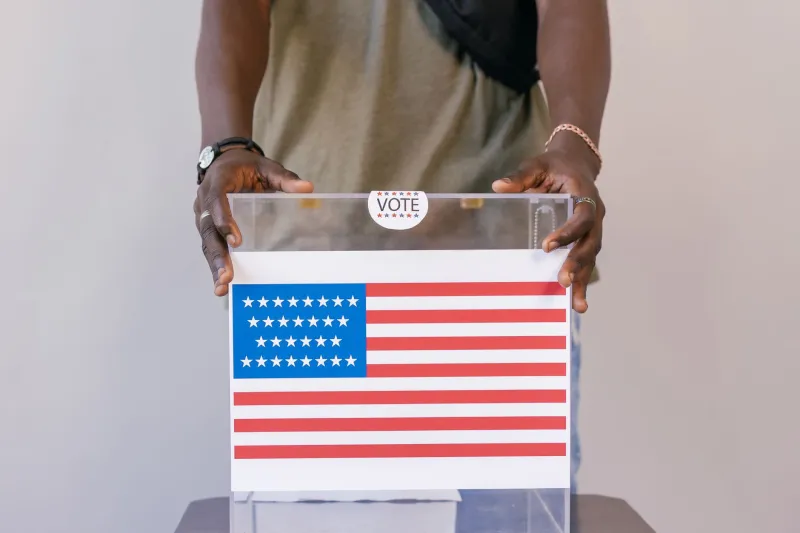
Every four years, the American political machine reaches its fever pitch — yard signs multiply like weeds, television screens overflow with attack advertisements, and dinner tables across the nation become contested battlegrounds. For the believer, this season carries a weight that secular commentators rarely acknowledge: the weight of spiritual accountability. When a Christian steps into that voting booth, they do not go alone. They carry with them the testimony of their faith, the witness of their church, and the standard of a God who governs all nations.
Yet in the current climate, far too many believers have allowed party loyalty to displace biblical discernment. They vote red or blue not because they have prayerfully examined the issues, but because their tribe demands it. This is not faithful citizenship — it is political idolatry wearing a Sunday-morning disguise.
At Head to Christ, we believe that genuine faith must inform every dimension of life, including the civic. The question is not whether Christians should engage in politics. The question is how — and upon what foundation.
The Danger of Defaulting to Party Identity
The apostle Paul warned the church at Corinth against dividing along human allegiances: "For when one says, 'I follow Paul,' and another, 'I follow Apollos,' are you not mere human beings?" (1 Corinthians 3:4). While Paul addressed ecclesiastical factions, the principle translates with striking relevance into our political moment. When a Christian declares, "I am a Republican" or "I am a Democrat" before declaring "I am a follower of Christ," something has gone spiritually wrong.
Party platforms are human constructions. They shift, they compromise, and they frequently contradict one another from decade to decade. The Republican Party of Abraham Lincoln bears little resemblance to its contemporary expression. The Democratic Party that championed the working class of the early twentieth century has traveled enormous ideological distance since those years. Placing ultimate civic trust in either institution is, at minimum, historically naive — and, at worst, a form of misplaced devotion that the Scriptures would call unfaithfulness.
This does not mean that party affiliation is sinful. It means that it must remain subordinate to a higher allegiance.
Building a Biblical Lens for Candidate Evaluation
So how does a thoughtful Christian voter actually approach the ballot? The process begins not with a candidate's name, but with a set of enduring biblical priorities.
Sanctity of Human Life. From Genesis to Revelation, Scripture affirms that every human being bears the image of God — the imago Dei. Any candidate's posture toward life, whether regarding the unborn, the elderly, the incarcerated, or the vulnerable, must be measured against this foundational truth. A policy that diminishes the dignity of any human being deserves serious scrutiny from the believer.
Justice and the Protection of the Marginalized. Proverbs 31:8-9 commands God's people to "speak up for those who cannot speak for themselves." Biblical justice is not a progressive buzzword — it is a divine mandate. Christians should ask: which candidates demonstrate a genuine commitment to fair governance, honest courts, and protection for those society most easily discards?
Religious Liberty. The freedom to worship, to preach, to educate one's children according to one's faith, and to operate faith-based institutions without government coercion is not merely a constitutional right — it is a spiritual necessity. Candidates who treat religious expression as a threat to public order deserve careful, skeptical examination.
Character and Integrity. Proverbs 29:2 observes that "when the righteous thrive, the people rejoice; when the wicked rule, the people groan." Character is not peripheral to leadership — it is central. A candidate's personal conduct, their history of honesty or deception, their treatment of opponents and subordinates — these are not tabloid distractions. They are moral data points that a discerning believer must weigh.
The Witness Question: Politics Without Losing Your Soul
Perhaps the most underexamined dimension of Christian civic engagement is the witness dimension. How does your political behavior testify to your neighbors, your colleagues, and your community about the nature of Christ?
When believers weaponize social media for partisan attacks, when they mock political opponents with contempt rather than engaging ideas with grace, when they prioritize electoral victory over truthfulness — they damage the credibility of the gospel they claim to proclaim. The watching world notices the gap between Sunday morning declarations and Tuesday morning social media posts.
This does not demand political silence. Silence in the face of injustice is its own form of unfaithfulness. But it does demand that the manner of engagement reflect the spirit of Christ. Speak truth, yes — but speak it with the composure and charity that Paul describes in Ephesians 4:15: "speaking the truth in love."
Practical Steps for the Faithful Voter
Before you cast your ballot, consider the following disciplines:
Pray with specificity. Ask God not merely for a righteous nation in the abstract, but for wisdom in evaluating the specific candidates and measures before you. James 1:5 promises that God gives wisdom generously to those who ask.
Read primary sources. Do not allow cable news, political podcasts, or social media algorithms to be your primary teachers. Read candidates' actual policy positions. Consult nonpartisan voter guides. Form your own conclusions.
Consult your church community wisely. Pastors should equip their congregations with biblical principles without endorsing specific candidates — and wise parishioners should welcome that distinction. The church is not a political action committee.
Maintain eternal perspective. No election determines the ultimate outcome of history. The God who raised Christ from the dead governs every presidency, every Congress, and every Supreme Court. Vote faithfully — then trust sovereignly.
A Nation That Needs More Than Politicians
America's deepest problems are not fundamentally political. They are spiritual. No election cycle will heal the fractures of a nation that has drifted from its moral moorings. Christians who understand this are freed from the anxious desperation that drives so much toxic political behavior — freed to engage the civic arena with confidence rather than fear, with principle rather than tribalism.
The ballot box is one arena of faithfulness among many. It matters. But it is not the altar. Only Christ occupies that place.
Vote with your values. Vote with your conscience. Vote with your eyes open to the Scriptures and your heart open to the Holy Spirit. And when the results come in — whether they bring celebration or disappointment — let your first response be the same: Thy kingdom come, Thy will be done.
That prayer, offered in sincerity, is the most powerful political act any Christian can perform.