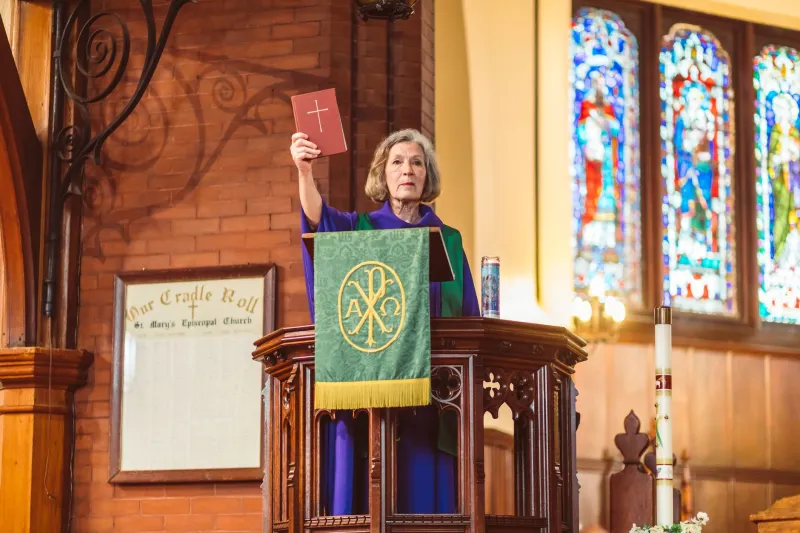
A Bible on the Shelf and a Faith Built on Sand: Confronting the Scripture Crisis in American Churches

Photo by Photo by Aaron Burden on Unsplash on Unsplash
In 1816, the American Bible Society was founded on the conviction that a nation shaped by Christian principles required citizens who could read and understand the Scriptures for themselves. Its founders understood something that many contemporary church leaders appear to have forgotten: a faith untethered from the actual content of the Bible is not merely weak — it is vulnerable to capture by whatever prevailing spirit happens to be blowing through the culture at the moment.
Two centuries later, that conviction has largely evaporated. Gallup surveys and Barna Group research have documented, with depressing regularity, that most self-identified American Christians cannot name the four Gospels, are uncertain which testament contains which books, and would struggle to articulate the basic contours of the faith they profess to hold. This is not a peripheral problem. It is a crisis at the foundation.
How We Arrived Here
The roots of American biblical illiteracy are not difficult to trace, though they are uncomfortable to acknowledge, because they run directly through the institutions that were supposed to prevent exactly this outcome.
The modern American church, particularly in its evangelical expression, has become largely a sermon-consumption enterprise. Congregants arrive on Sunday morning, receive a carefully prepared message from a trained professional, and depart with a thought or two to carry into the week. The implicit model is one of spiritual delivery: the pastor has studied so that the congregation does not need to. The result, predictably, is a church full of people who are dependent on their pastor's interpretation of Scripture without possessing the independent capacity to evaluate whether that interpretation is sound.
This arrangement would have alarmed the Reformers profoundly. Martin Luther's insistence on translating the Bible into the vernacular was not primarily a linguistic project. It was a theological one, rooted in the conviction that every believer had both the right and the responsibility to encounter the Word of God directly. The priesthood of all believers, as the Reformers understood it, was not a statement about organizational structure. It was a statement about the spiritual competence and obligation of every Christian to know and wrestle with Scripture personally.
The Devotional Sound Bite and Its Discontents
If the sermon-driven model has produced passive consumers of theological content, the rise of daily devotional culture has compounded the problem by replacing sustained engagement with Scripture with something far more digestible — and far less nourishing.
The devotional industry in America is enormous. Apps, email subscriptions, pocket-sized booklets, and social media accounts deliver daily doses of spiritual encouragement to millions of Christians who sincerely believe they are engaging with the Bible. And in a narrow technical sense, they are — a verse appears, usually stripped of its context, followed by a paragraph of warm application and an invitation to prayer.
What is missing is the connective tissue: the narrative arc of Scripture, the theological logic that links the Old Testament to the New, the careful attention to genre and authorial intent that transforms a collection of ancient texts into a coherent and life-shaping revelation. A Christian who knows dozens of individual verses but has never grasped the overarching story of Creation, Fall, Redemption, and Restoration is like someone who has memorized isolated sentences from a novel without understanding the plot. The sentences may be beautiful. They do not, by themselves, constitute comprehension.
What Illiteracy Costs the Church
The consequences of this condition are not abstract. They show up concretely in congregations across the country every week.
When a prosperity gospel preacher claims that financial blessing is the guaranteed sign of God's favor, a biblically literate congregation has the resources to recognize the distortion immediately — to recall Job, to remember Paul's catalog of sufferings in 2 Corinthians 11, to weigh the claim against the whole counsel of Scripture and find it wanting. A congregation that knows only the verses the preacher chooses to cite has no such defense.
When cultural movements redefine core theological categories — sin, justice, identity, redemption — and dress those redefinitions in the language of Scripture, a church that has read broadly and carefully can recognize the sleight of hand. A church that has been told what the Bible says rather than trained to read it for themselves is far more susceptible to that kind of manipulation.
And when personal suffering arrives — as it inevitably does — the Christian who has spent years with the Psalms, with Lamentations, with the book of Job, carries within them a vocabulary for grief and a theology of divine hiddenness that can sustain faith through the darkest seasons. The Christian whose spiritual diet has consisted largely of encouragement and affirmation may find, in the moment of genuine crisis, that their faith has no deep roots to draw upon.
A Historical Standard We Have Abandoned
It is worth pausing to consider what earlier generations of American Christians expected of themselves in this regard. The Puritans who settled New England held to a standard of biblical engagement that would seem extraordinary by contemporary measures. Sermons routinely ran for two hours or more and assumed a congregation capable of following sustained theological argument. Family worship, including the reading and discussion of Scripture, was considered a basic obligation of the Christian household. Catechisms — structured summaries of doctrinal content — were memorized by children as a matter of course.
None of this is to suggest that the Puritan experiment was without its grave failures, which were real and significant. But their approach to Scripture reflected a conviction that has since been largely lost: that the Word of God was not a resource to be sampled but a world to be inhabited, and that inhabiting it required sustained, disciplined, communal effort.
The nineteenth-century frontier revivals shifted American Christianity toward an experiential emphasis that, while recovering genuine spiritual vitality in some respects, also began the long erosion of doctrinal seriousness. By the time the twentieth century's therapeutic culture arrived, the transformation was nearly complete. The question had shifted from What does Scripture teach? to What does this verse mean to me? — a question that, however personally sincere, is ultimately unanswerable without the contextual knowledge to evaluate the answer.
The Path Back
Recovering biblical literacy in American Christianity will require more than adding a Bible study to the church calendar. It will require a fundamental reorientation of what the church believes it is for.
Pastors must resist the temptation to do all the interpretive work for their congregations and instead invest in equipping people to read Scripture themselves — to understand basic principles of biblical interpretation, to read entire books rather than isolated passages, to ask not only what a text means but what it meant to its original audience and how that meaning speaks across the centuries.
Congregations must be willing to accept the discomfort of genuine intellectual engagement with material that is sometimes difficult, sometimes disturbing, and sometimes demanding of a response they would rather avoid. The Bible is not a collection of inspirational quotes. It is the living Word of a holy God, and it deserves the kind of attention that holy things demand.
A faith built on spiritual impressions and borrowed interpretations will not hold when the storms come. A faith built on the deep, patient, communal reading of Scripture has stood for two thousand years — and it can stand again, if American Christians are willing to do the work.